SARCOIDOSIS STORY
Read below the amazing story of Martin and learn more about his journey with sarcoidosis.
But it’s just a spot?
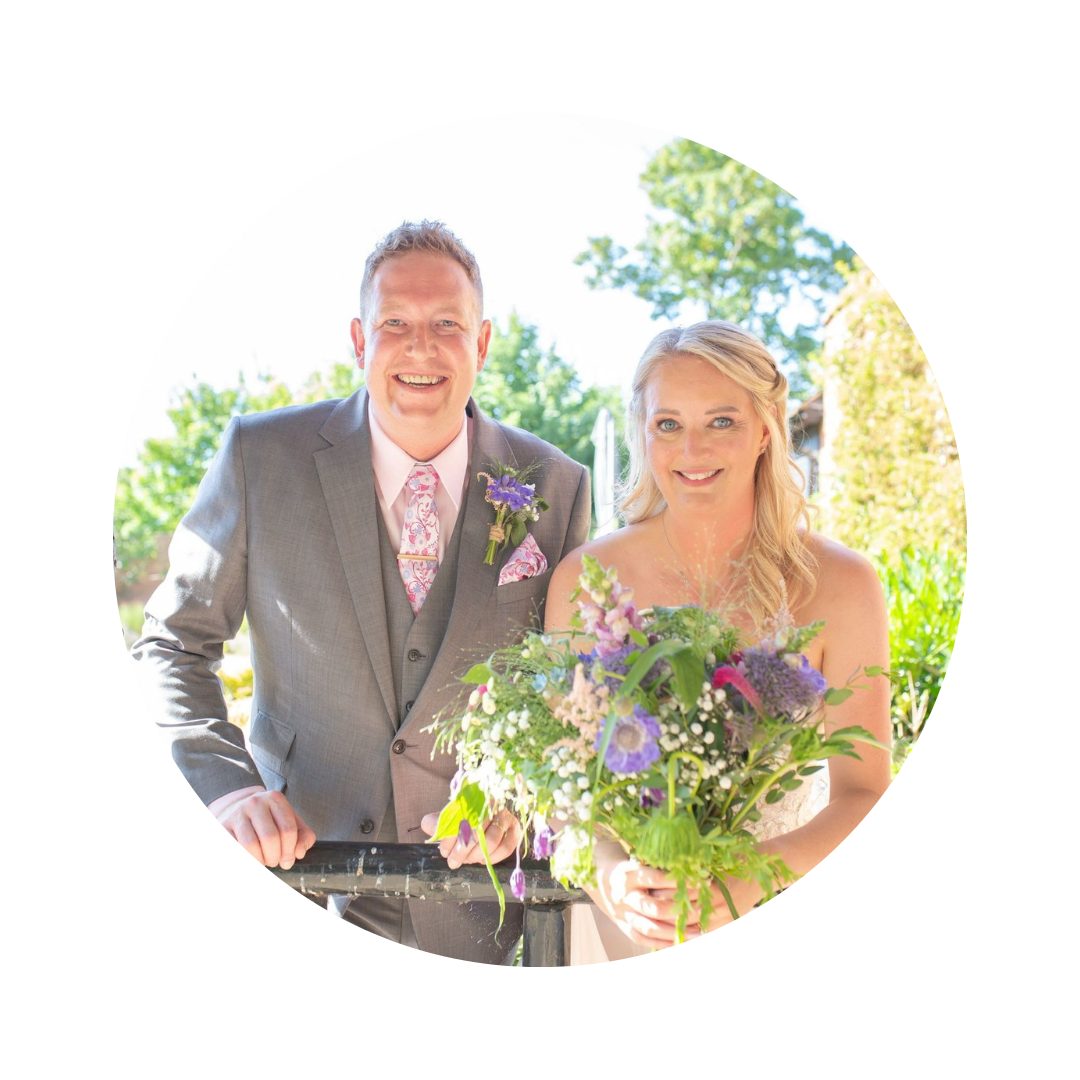
The story most people remember is that I got married on the Saturday and went into hospital on the Monday.
It is a good shorthand, because it sounds almost too dramatic to be real: wedding suit one day, hospital gown the next. Honeymoon cancelled before we had really begun married life. The first romantic meal as husband and wife with me in a hospital bed, not sitting across from Sarah somewhere warm, relaxed and miles away from normal life.
But that was not where it started.
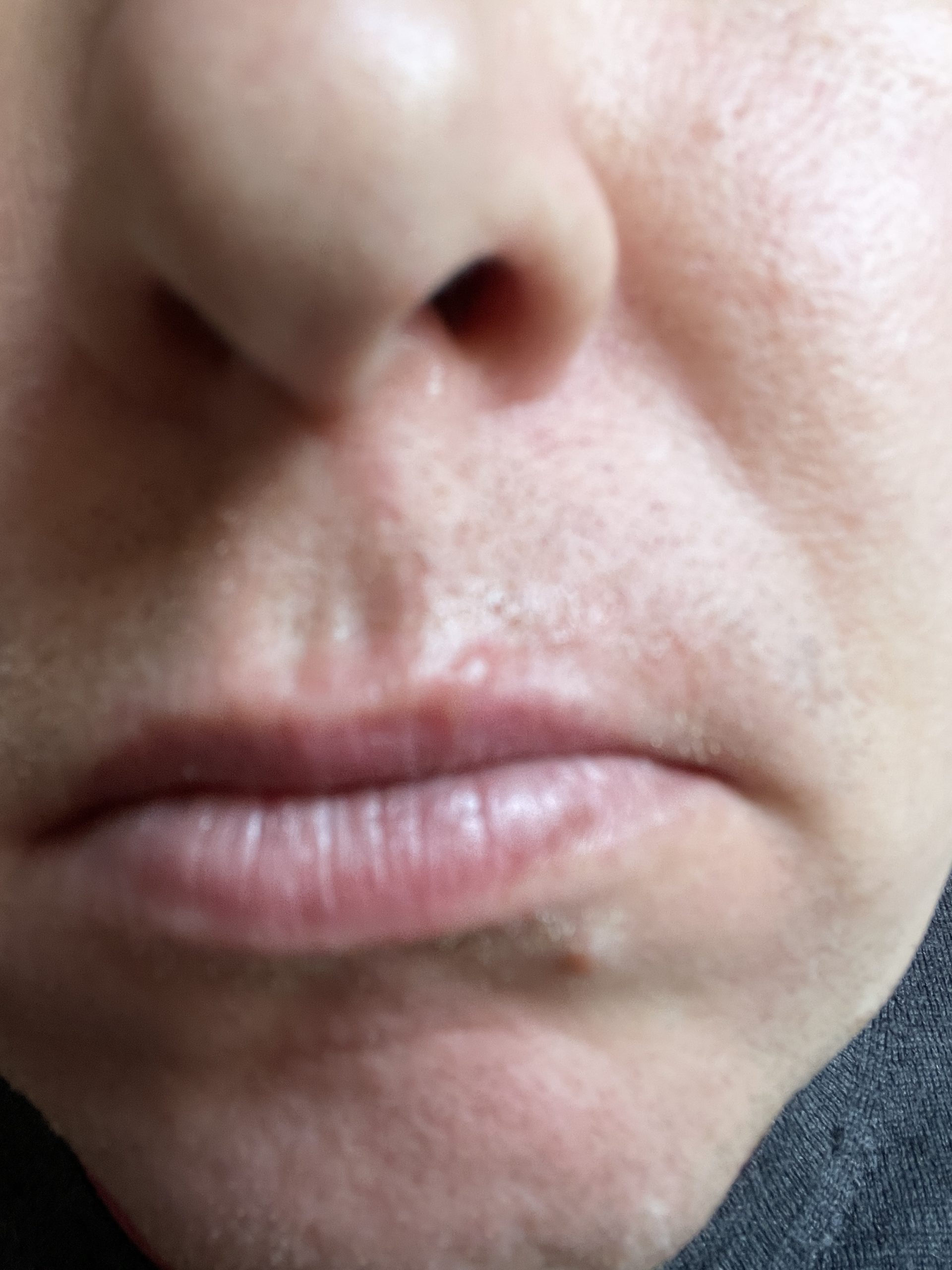
It started quietly, during the first lockdown, with a small lesion on my upper lip that did not go away. At first, it was just a mark, then something that kept growing, then something that needed checking. Doctors initially thought it could be melanoma, which is the sort of word that changes the air in the room. But the tests pointed somewhere else. Granulomata. Sarcoidosis.
At that point, sarcoidosis was still a word I was learning to understand. It sounded like one of those rare diseases that turns up halfway through an investigative medical drama; the kind of thing doctors say while everyone else looks concerned, and ‘cue the cut scene’. It felt serious, but also strangely abstract, as though it belonged to someone else’s case notes rather than my own life.
One of the strangest parts of all this is that, for much of the journey, I have still been able to function. In some ways, I have functioned better than most. I have worked, kept going, stayed active, played sport, managed responsibility, and looked, from the outside, like someone who was largely fine.
That has been hard in its own way.
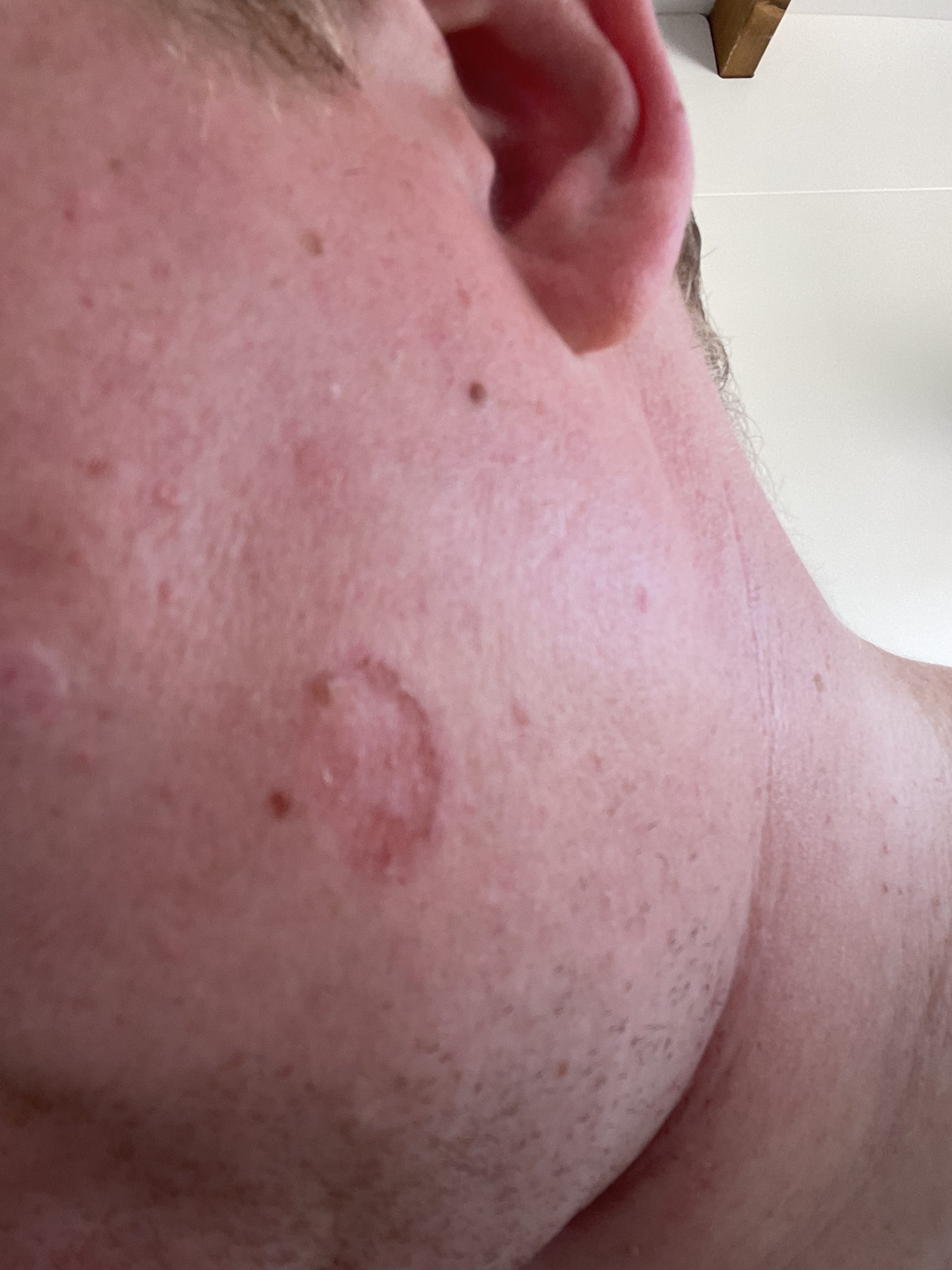
Because apart from the thing that first revealed the disease; the lesion on my lip, and later the visible lesions on my face; much of the serious part of the illness has been hidden. The most frightening findings were not always things I could feel. They were found in scans, ECGs, blood results, consultant letters, and treatment plans. My heart was involved, my body was showing systemic disease, and yet I was not walking around feeling like someone whose body was under that level of attack.
That creates a strange kind of disbelief. Not disbelief from other people necessarily, but sometimes from myself. How can something be serious if I can still get through a working day? How can I have cardiac involvement if I can still walk around, play sport, and live normally most of the time? How do you explain being ill when you are also, in many practical ways, still capable?
It has made the whole thing harder to process. Acute illness gives people obvious signals. This has often been different. It has been quiet, internal, technical, and strangely invisible, except for the parts on my face, which became impossible to ignore.
I was referred to a thoracic consultant. My lungs were tested, and thankfully my lung size and function were unaffected. That should have been the relief. In some ways it was. But the consultant did not stop there. I was referred on to cardiology, where they found an arrhythmia and a low pulse rate. An MRI then suggested enlargement of my heart.
That was the point where the story became harder to keep at arm’s length.
A couple of weeks before my wedding, I was referred to a specialist cardiac sarcoidosis consultant for further testing. I had a CT PET scan to look for active sarcoid in my body. The results came by Zoom call on Friday 8 July 2022; the day before our wedding.
The scan showed sarcoid activity in the left side of my heart, significant enlargement, reduced function, and evidence elsewhere too: bones, abdomen, lymphatic system. I was told I was unfit to travel. The honeymoon was cancelled. I would be admitted on Monday 11 July for IV immunosuppressive steroid treatment, followed by oral steroids and long-term monitoring. There was also talk of needing a heart monitor implanted to assess whether I might need a pacemaker.
It was a shock because, on the surface, I did not feel like someone who should be hearing any of that. I had not collapsed. I was not dramatically unwell. I was a rare case of being largely asymptomatic, still functioning, still getting on with life, just in from a run that morning, and working out the logistics of the day to come with my betrothed.
Then suddenly I was being told that something serious had been caught inside me.
We both cried when learnt this news, we both had to consider that given Covid was still a factor, and now it was very much more I was suddenly thrust blindly head first into a high risk category and we were about to stand in front of a hundred people and read our vows, should we cancel the wedding? Should we just have it as us? Do we need to warn the guests to be vigilant and don’t come if you are ill or there’s a chance? We already had three dropouts for just this reason.
The timing was absurd. One day I was marrying Sarah, surrounded by the people we loved most. The next working day I was in hospital beginning treatment for a systemic disease that had reached my heart. The start of married life became consultants, cannulas, steroids, monitoring, and cancelled plans.
And yet, even then, I felt lucky.
Lucky it had been found before I got on a plane. Lucky it had been found before I hit the ground. Lucky it had been caught before it caused something worse. Lucky to be under specialist care, with people who understood the condition and knew how to respond.
But luck is complicated when it arrives dressed as illness.
The acute part got everyone’s attention. The hospital admission. The heart findings. The cancelled honeymoon. The dramatic contrast between wedding photos, the new ring on my finger but also the cannula on the same hand. That was the part people could understand.
The harder part was what came afterwards.
Because sarcoidosis did not become a single event that I recovered from. It became a long, non-acute, systemic presence in my life. It became the thing sitting behind appointments, blood tests, scans, medication changes, side effects, questions, and decisions. It became something I had to learn to live with, not just something I had to be treated for.
Treatment became its own chapter.
The medication kept me safe, but it also changed me. Steroids were necessary, especially with heart involvement, but they came with a cost. My appetite changed. My weight changed. My blood sugar changed. Diabetes entered the picture. My energy became harder to predict. Some days I felt wired. Some days I felt flattened. Some days I just did not feel like myself.
Then came the secondary problems; the things that can sound minor when written down but become exhausting when they keep happening. Mood changes. Thrush. Skin irritation. Sleep disruption. Fatigue. The constant sense that each solution had the potential to create another problem that then needed managing.
That has been one of the strangest lessons of this whole journey: treatment is not always a clean line from ill to well. Sometimes it is a negotiation. What risk are we reducing? What side effect are we accepting? What new issue has appeared because we solved the last one?
Over time, the list of medication grew. Immunosuppressants. Steroids. Methotrexate. Infliximab. Thalidomide. Diabetes medication. Blood pressure medication. Statins. Stomach protection. Antihistamines. Folic acid. Then changes again. Adjustments. Stopping one thing. Starting another. Watching results. Waiting to see what my body would tolerate.
There were times when I felt less like a person living a life and more like a project being managed. And managing all those meds is a project! As is recycling the pill packets!
And then there were the things outside my control entirely. At one stage, a major shift in America affected the availability of drugs I relied on. That was a different kind of helplessness, it’s fashionable to be thin!. You can do everything right. You can attend the appointments, take the medication, follow the plan, monitor your bloods, ask the right questions, and build your life around a treatment pathway and then something happening on the other side of the world can still disrupt it.
That sort of thing chips away at your confidence.
Not all at once. Not dramatically. Just gradually.
Confidence in my body. Confidence in making plans. Confidence in how I looked. Confidence in whether I could commit to things. Confidence in whether I could be reliable. Confidence in whether life would stay stable long enough for me to move forward.
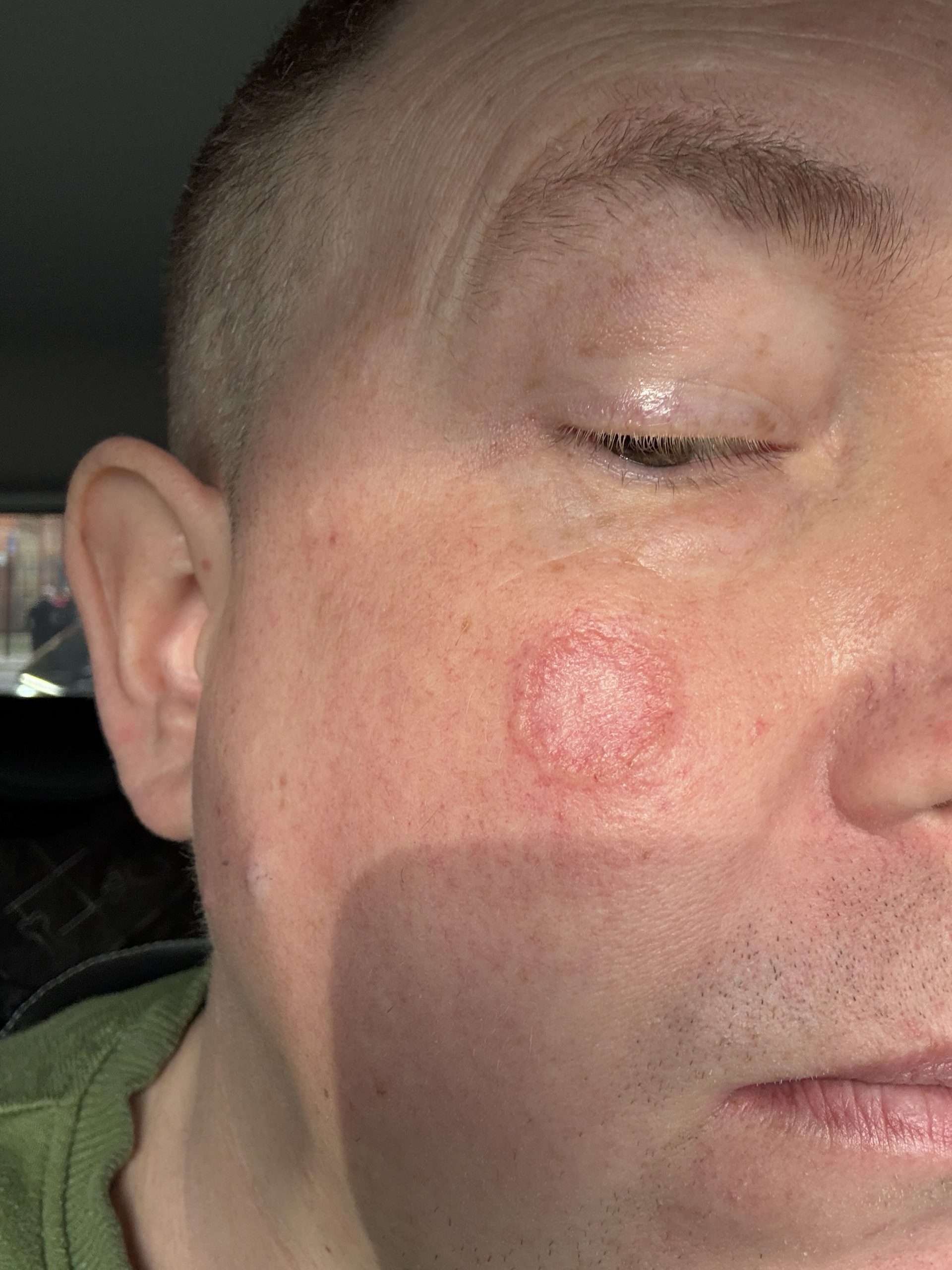
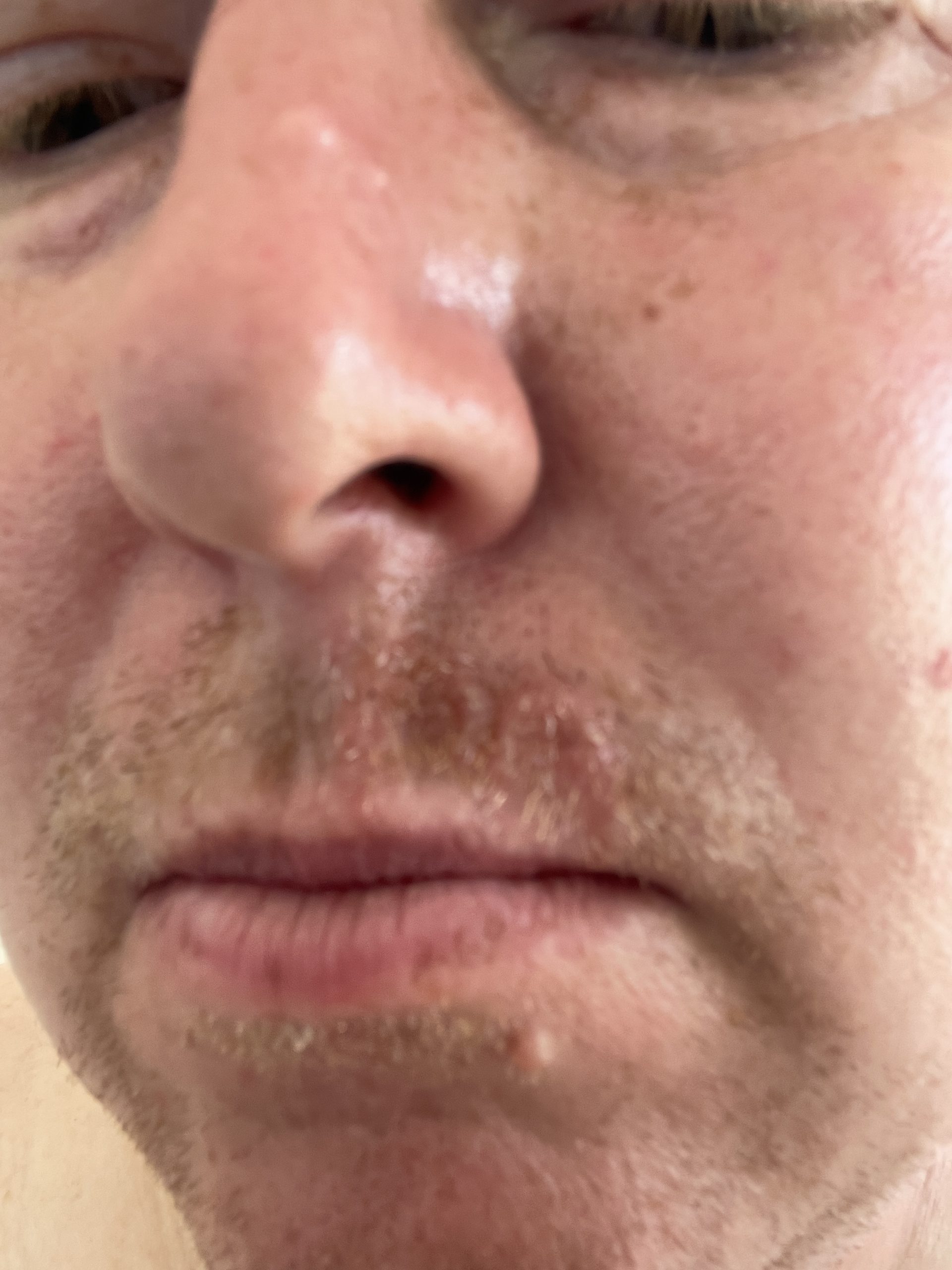
The lesions on my face became part of that. They were not just medical symptoms. They were visible. They affected how I saw myself and how I thought other people saw me, although they often said, ‘I didn’t even notice’. It is one thing to carry illness quietly inside your body; it is another when it appears on your face and becomes part of every mirror, every photo, every conversation you wonder whether someone is too polite to have.
There were hospital visits, medication changes, flare-ups, side effects, blood tests, and periods where life felt paused. At times, it affected my work choices too. I thought about moving jobs, but how could I? How could I sit in front of a new employer and explain the uncertainty? How could I ask someone new to take a chance on me when I was not always sure what the next month would look like myself?
So, I stayed. I kept going. I managed what was in front of me.
But “kept going” sounds simpler than it is.
Keeping going meant working while tired. Keeping going meant trying to be present at home while mentally carrying the next result, the next scan, the next change in medication. Keeping going meant trying to be normal in conversations when my head was full of risk calculations. Keeping going meant learning the difference between pushing through and being stupid. I did not always get that right.
There were lows. Proper lows. Not just frustration, but a loss of trust in myself. A loss of momentum. A feeling that I had become smaller than I used to be.
That is where mental health coaching became part of the story. Not because the illness was “in my head”, but because living with it put a lot in my head. It helped me rebuild some of what had been worn down. It helped me separate what was real from what was fear. It helped me regain confidence, not in some grand motivational sense, but in smaller and more useful ways: plan, take the next step, stop catastrophising, notice progress, stop letting uncertainty make every decision for me, to come to terms with being ill, but not feeling ill. To learn to manage how it made me feel. To have someone to talk to about how this was and should be the honeymoon period, and now it was just about me. How the disease had destroyed our expectations, and on the surface you wouldn’t really know apart from ‘a few marks’.
And slowly, confidence did start to come back.
Not the old confidence exactly. Something more measured. More aware of risk, but less ruled by it. More realistic. Probably harder- earned.
There have been ups and downs all the way through; in health, in medication, in weight, in energy, in mood, in how I look, in how much I trust my body, in how much space the disease takes up in my day. Sometimes it has felt controlled. Sometimes it has felt like it was creeping forward again. Sometimes the treatment has felt worse than the condition. Sometimes the treatment has been the reason I could keep living normally at all.
That contradiction is difficult to explain unless you have lived it.
Six years in, I am not at the beginning anymore. I understand more. I ask better questions. I know my results, my medication, and what certain symptoms might mean. I also know that, in some ways, I am still an experiment.
Sarcoidosis is different. It does not behave neatly. It does not always follow a predictable path. On the surface it can seem innocuous, even quiet, but underneath it keeps working away. It tests the doctors, it tests the treatment, and it tests me.
So, I have learned to keep asking: “OK, that didn’t work; what’s next?” I know when something feels different. I know that excellent care does not make the whole thing easy. It just means I am fortunate while dealing with something hard.
I also know this has changed me.
It has changed how I think about health, work, marriage, time, risk, and the future. It has made me more grateful, but also more impatient with empty reassurance. It has made me more resilient, but I do not want to dress that up as though resilience is always noble. Sometimes resilience is just what happens when you do not get another option.
The story started with a small lesion in lockdown.
Then it became a wedding interrupted by a diagnosis.
Then it became hospital.
Then it became years of medication, side effects, visible symptoms, invisible fatigue, uncertainty, confidence lost and rebuilt, plans changed and remade.
And it continues.
Not as a neat recovery story. Not as a tragedy either. More as a long lesson in living with something that does not always announce itself loudly but is always there somewhere in the background.
I am still here. Still working. Still happily married to Sarah. Still managing it. Still trying to get fitter, stronger, steadier, and more confident. Still learning when to push and when to rest. Still adjusting when the plan changes.
Still grateful it was caught.
Still changed by what followed.
Still moving forward.
Help us to support people like Martin:
SarcoidosisUK is 100% reliant on your generosity and none of our work is possible without donations. Every donation, big or small, makes a huge difference and can help us to support people like Martin with their sarcoidosis journey. Your donation can change lives.
Thank you!